
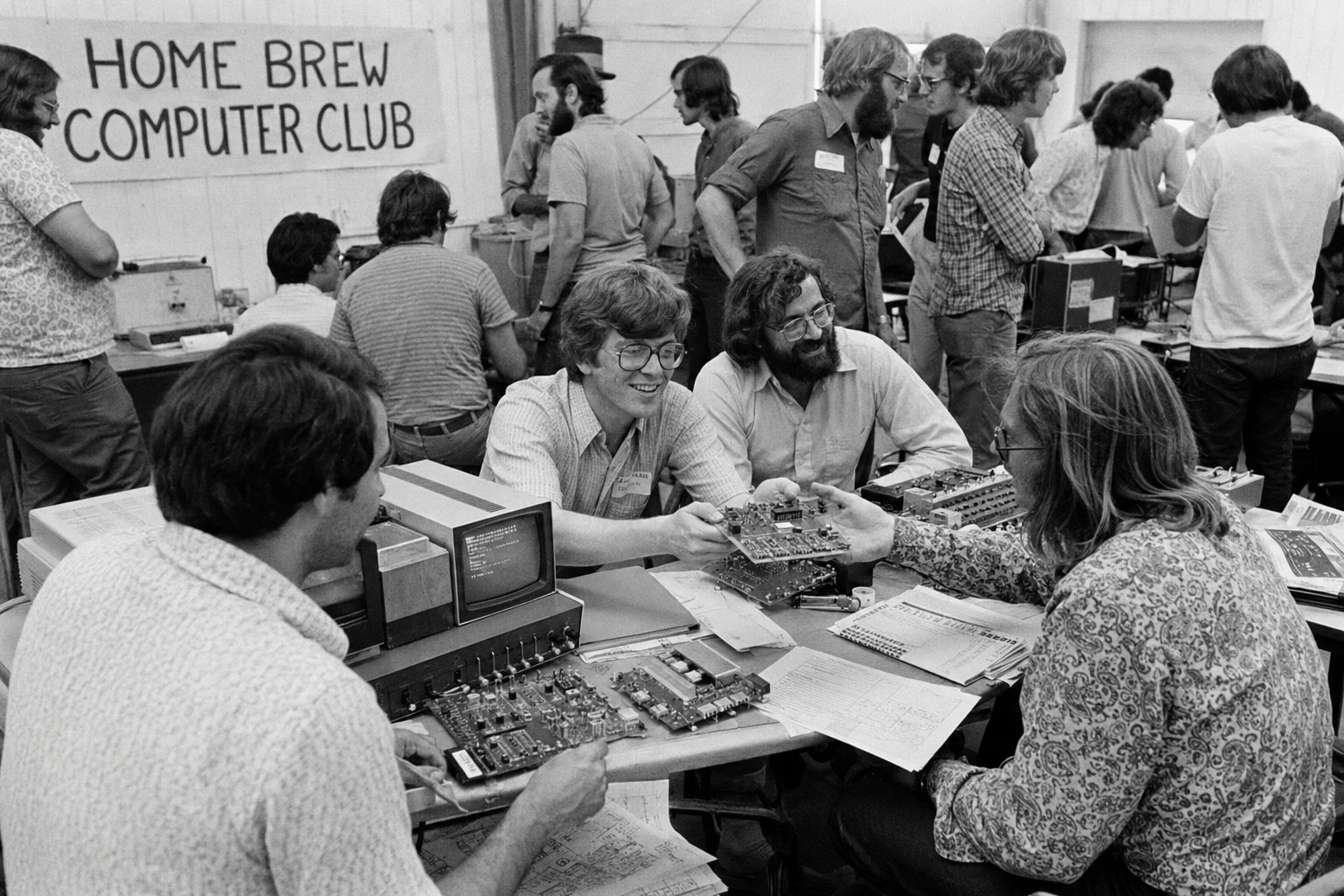
The Homebrew Computer Club, 1975 — people bringing what they built, and passing it around.
Why this club exists, and what it’s for
A small, warm place where the software we make for our tablets flows between friends — not an app store, a potluck.
Fifty years ago, a group of people started meeting in a garage in Silicon Valley to show each other the computers they were building at home. They called it the Homebrew Computer Club. Nobody was selling anything. They brought what they'd made, passed around circuit boards and scraps of code, and helped each other get unstuck. One of the people who showed up was a young Steve Wozniak; the little machine he demoed there grew into the first Apple computer. But the club was never really about that. It was about the sharing — the plain joy of making something and handing it to a friend.
We wanted to bring that feeling back.
Think about how we get software today. It comes from app stores — huge, glossy, and built for one thing: transactions. An app store is a checkout counter. It's designed to move you from wanting to buying as fast as it can, to rank things by what sells, to keep you as a customer. That works, but it's a cold way to stand next to the things people make. It quietly turns every creation into a product, and every person into a user.
But making something isn't a transaction. It's personal. When you build a tiny app for your kid, or fix some little annoyance on your own tablet, you're putting a piece of yourself into it. It's a bit vulnerable to show someone. And the best part was never selling it — it's the moment a friend leans over and says "wait, can I have that?" and you get to say yes. That isn't commerce. That's a gift.
A store optimizes transactions. A potluck optimizes reciprocity — asking, thanking, showing off, coming back.
This club runs on the opposite of a store. It runs on reciprocity — the quiet back-and-forth of people who make things for each other. You share something. Someone installs it and leaves a note saying it made their morning a little better. Someone else wishes out loud for a thing that doesn't exist yet, and you make it for them. Someone takes what you built and remixes it into something you'd never have thought of, and hands it back. Asking, thanking, showing off, coming back, giving, borrowing. None of it is bought; all of it is shared. And because every recipe is open, the whole club gets smarter together — each app is a running start for the next one.
The first draft of this page told the same story in stick figures — 1975 on the left, us on the right. We're keeping them, because around here nothing homemade is too unfinished to show.
There's a quieter reason all of this works, and it's worth saying out loud: we're small, and we know each other. An app store has to assume the worst, because it serves a billion strangers — so everything about it is built around distrust. Review queues, scare screens, warnings stamped on anything that didn't come through the front gate. That's the right design for strangers. But this isn't a room full of strangers. When an app comes from Melissa, your trust doesn't come from a checkmark — it comes from knowing Melissa. Sharing between friends runs on a completely different trust model than selling to a crowd, and that's exactly why the club can afford to be this open: every recipe readable, every dish passed hand to hand. We still wash our hands — every app is signed, inspected, its permissions read out loud on the card — but care between friends feels different from security between strangers. One is warm. The other is a metal detector.
That's the whole goal. Not to build another store, but to keep a small fire going: a place where the things we can't wait to show each other don't stay locked to our own tablets, but pass between friends the way a good recipe travels around a kitchen. Bring a dish, take a dish, leave a note for the cook. Fifty years ago, a room full of people sharing what they built changed computing forever. We'd love to do a little of that again — just us, our friends, and the small, personal software we make for the way we actually want to live with our machines.
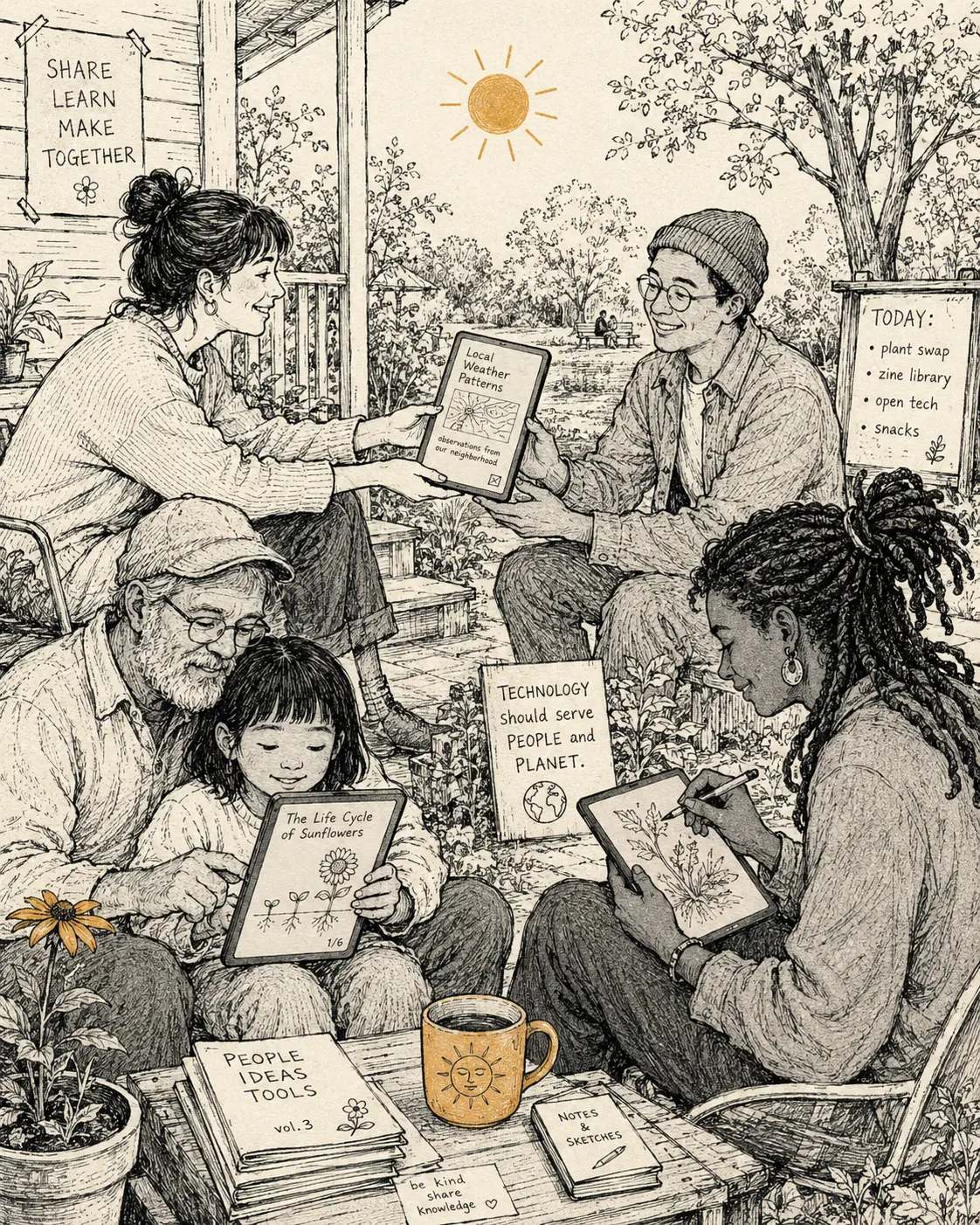
The Daylight Computer Club, now — the same thing, in the sun, passing apps instead of circuit boards.